
When “Centrists” Go Mask-Off: Why You Should Vote YES on Proposals A and B
Amber Fellows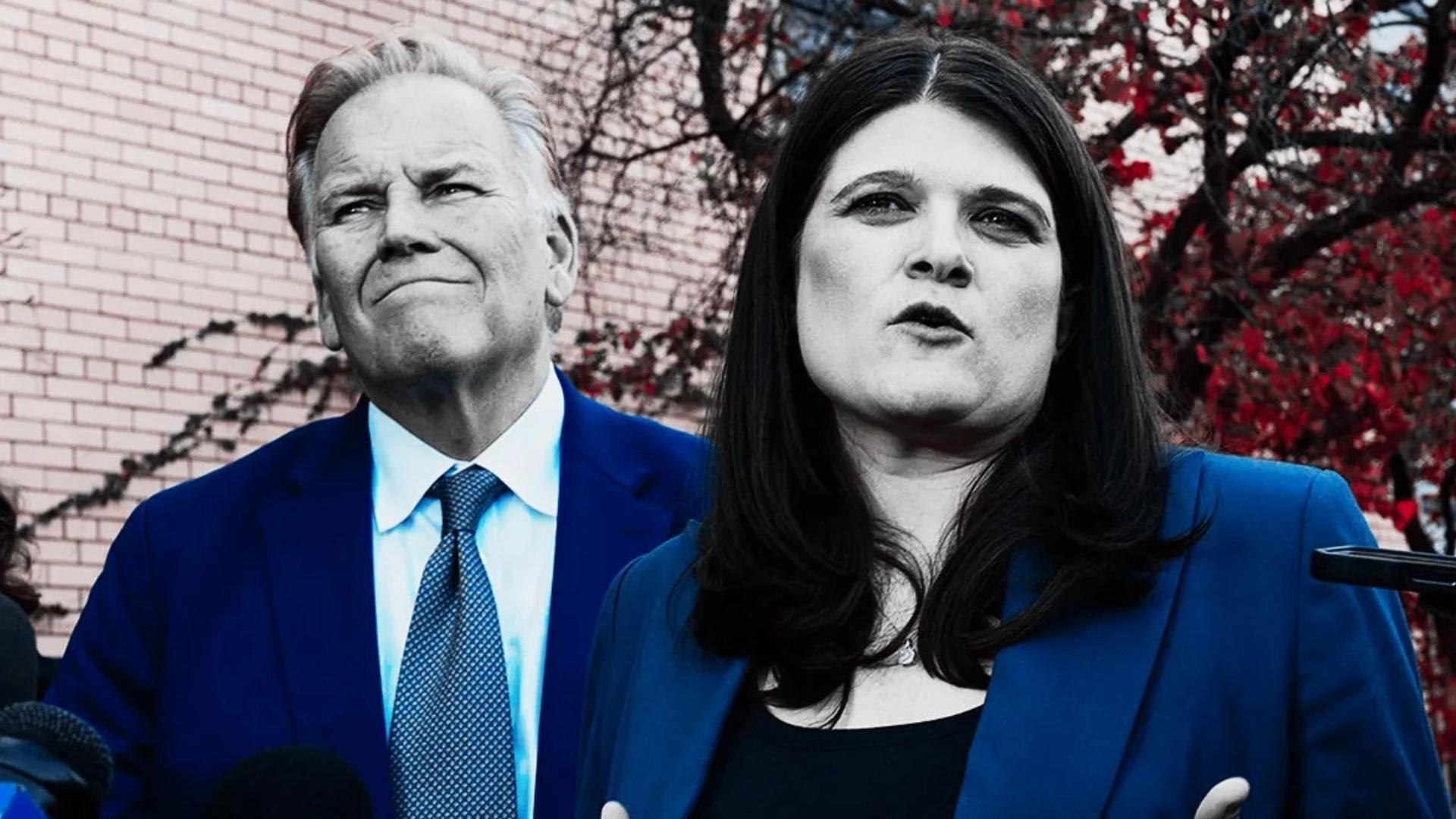
Ypsilanti voters have a rare opportunity this November to strengthen local democracy in two concrete ways. Proposals A and B are citizen-led charter amendments that would bring nonpartisan local elections and require voter approval for police budget increases. Both deserve a YES vote.
Proposal A: Close the Partisan Primary Loophole
Ypsilanti’s local elections are effectively decided in the August Democratic primary, where only about one-fifth of the city’s voters choose the mayor and city council. The partisan primary, paired with straight-ticket voting, makes the November general election a foregone conclusion: whoever wins the Democratic primary wins the seat. A small, less representative, slice of the city picks our leaders—while most residents are effectively shut out.
If Mike Eller and Haley Stevens can perform well in a Democratic primary, do those primaries really filter out Republicans as effectively as they are said to?
Ypsilanti and Ann Arbor are now the last two cities in Michigan with partisan local elections. In 2023, Ionia voters overwhelmingly approved a charter amendment to get rid of their partisan primary system and designate all elective city offices as nonpartisan, passing it with roughly 65% support.
Supporters of the status quo warn that eliminating the partisan primary could let a conservative “spoiler” slip into office. Ypsilanti’s own history proves that fear is overblown. In the 2006 Democratic primary for mayor, Steve Pierce—a proponent against the Water Street Millage and founder of the anti-tax group Stop City Increasing Taxes—ran against two more liberal candidates and lost. In the 2012 Democratic primary for the Ward 3 council seat, Mike Eller—a former America First Party chairman who later became a MAGA Republican—ran against two candidates and lost to the progressive candidate, Pete Murdock. This shows two things: first, there is no reason to believe that the Democratic primaries are somehow invulnerable to being won by (effectively) Republicans. Second, if there is a place where conservatives can win, it very well may be the primary where voters skew conservative, white, old, and wealthy–even in the ‘D’ column.
No Republican has won a Ypsilanti City Council race since the early 1990s. As a result, Republican-aligned candidates sometimes run in the Democratic primary instead, likely betting that masking their conservative values and party allegiances—while exploiting the primary’s smaller electorate—will give an organized bloc disproportionate influence.
2006 Democratic Primary – Ypsilanti City Mayor
| Candidate | Votes | Percentage |
| Steve Pierce | 866 | 36.59% |
| Lois E. Richardson | 460 | 19.43% |
| Paul T. Schreiber | 1,041 | 43.98% |
2012 Democratic Primary – Ypsilanti Ward 3 Council
| Candidate | Votes | Percentage |
| Mike Eller | 242 | 33.02% |
| Peter J. Murdock | 440 | 60.03% |
| Ted Windish | 47 | 6.41% |
In both cases, known conservatives ran as Democrats in a low-turnout primary against multiple more liberal candidates and still lost. Proposal A would eliminate the partisan primary and place all candidates on the November ballot. Elections like the 2006 and 2012 primaries above would then be decided by a much broader electorate—three to four times as many voters. A conservative spoiler would need to win over that larger, more representative pool, not just a small primary slice. The argument against nonpartisan elections on the basis of conservative spoilers does not hold up.
The deeper danger of the current primary system is that it rewards centrists who reveal their real allegiances only under pressure. Haley Stevens is a case-in-point. After losing the Democratic U.S. Senate primary to progressive Abdul El-Sayed, Stevens—two days before the general election—endorsed Republican Mike Rogers, the Trump-backed candidate, over her own party’s nominee. Centrists like Stevens do not reveal whom they really serve until they are forced to choose between meaningful change and reaction, then they go “mask off”. If Mike Eller and Haley Stevens can perform well in a Democratic primary, do those primaries really filter out Republicans as effectively as they are said to?
Under a nonpartisan system, there is no party label to hide behind—candidates must win over voters on their actual records, ideas, and allegiances. That is exactly what Proposal A delivers: it will increase competition, and ensure our local leaders are chosen by the many, not the few.
Proposal B: Give Voters a Say on Police Budgets
Proposal B would require that any proposed increase to the police department’s budget be approved by a citywide vote during a November general election. It does not defund or decrease the police budget. It simply gives residents the final say on proposed increases—a matter of basic fiscal responsibility and transparency.
Money spent on policing is money not spent on parks, mental health services, or the city’s incoming non-armed crisis response unit.
Consider the neighboring community of Pittsfield Township, which operates its own police department similar to Ypsilanti’s—but with a critical difference: voters decide whether to approve or deny proposed police funding increases. In May 2021, Pittsfield voters rejected a public safety millage increase that would have doubled the rate from 1.95 mills to 3.95 mills, with 2,835 votes against and 2,385 in favor. Officials had warned of staffing cuts, but voters demanded a more modest proposal. That November, Pittsfield voters approved a revised increase from 1.95 to 2.95 mills for five years, passing it by a margin of 581 votes with roughly 55% in favor. The system worked: voters had leverage, officials went back to the drawing board, and a compromise was reached.
Ypsilanti can adopt the same approach. By passing Proposal B, the city could move police expenditures from the general fund to a millage approved or denied by popular vote. This would give residents a direct voice over a significant portion of the city budget and force greater accountability from officials. Pittsfield voters have demonstrated they take this responsibility seriously—and there is no reason to believe Ypsilanti voters would do any differently.
In 2021, City Council added three police officers and $238,500 per year to an already over-budget department—without public notice or input, in the final reading of the budget. The move brought the city to a $1 million shortfall. Police Chief DeGiusti himself said, “I could put a police officer on every street corner and it’s not gonna stop gun violence,” and then-Councilmember Nicole Brown admitted that “the [added] bodies don’t create safety.” A budget is a value statement, and right now the values are set without meaningful resident input. Proposal B changes that.
The evidence also challenges the assumption that more police spending automatically means safer streets. A Brennan Center study found that increased police numbers had no measurable effect on crime from 2000 to 2013, while factors like income growth and reduced alcohol consumption were more consistently linked to public safety. Money spent on policing is money not spent on parks, mental health services, or the city’s incoming non-armed crisis response unit. Proposal B gives voters the leverage to make those trade-offs visible—and to demand a say in them.
Who Can Vote—and How
Who can vote on these ballot props? Any City of Ypsilanti resident. Not township—city residents only.
When can I vote? November 3rd, at your regular polling place. Polls are open 7 a.m. to 8 p.m., and if you’re in line by 8 p.m., you can vote.
Who wrote these proposals and got them on the ballot? A loose collective of Ypsilanti neighbors and friends wrote the language and canvassed under the name Ypsi BIG (Ypsilanti Ballot Initiative Group) in 2024. Due to procedural delays, the initiatives were unable to appear on the ballot until 2026. Over two thousand Ypsilanti voters signed petitions to place Proposals A and B on the ballot.
What’s the deal with ballot initiatives? A ballot initiative is a change to the law that gets onto the ballot through a citizen petition. It’s a grassroots way for regular people to organize for a change they want to see—without having to go through elected officials.
The Bottom Line
Proposals A and B are about trusting voters. Proposal A trusts a broader electorate to choose local leaders without the filter of a low-turnout partisan primary. Proposal B trusts residents to decide whether proposed police budget increases are justified. Both measures will make Ypsilanti’s local government more transparent, more accountable, and more responsive to the people it serves.
Vote YES on Proposals A and B on November 3rd.
